Students struggle to find accommodation at CPUT as campus facilities reach full capacity
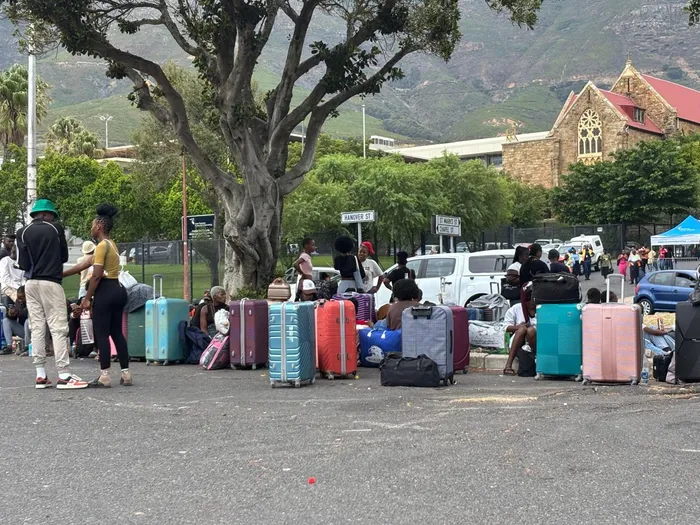
Last Tuesday, February 3, students camped outside the CPUT District Six campus waiting to be placed in accommodation
Image: TARA ISAACS
Nearly a week after arriving in Cape Town, several students are still without confirmed accommodation, prompting concern among families and the broader community.
However, the Cape Peninsula University of Technology (CPUT) has denied a delay in placements, saying all university-owned residences are now operating at full capacity.
Responding to questions, CPUT spokeswoman Lauren Kansley said students who have not been placed in campus-owned accommodation are required to seek housing through private landlords who have agreements with the university.
“There is no delay. CPUT-owned and operated residences are full to capacity. Students who haven’t been placed must source accommodation from an extensive list of private landlords affiliated with the university,” she said.
She explained that students who receive NSFAS funding are able to work through financial aid, with landlords being paid directly from their NSFAS allocation.
According to Ms Kansley, thousands of students are already housed in this way, a system commonly used across universities.
“The issue arises because some students expect to be placed in campus-owned residences, which are now full,” she said.
While the exact number of affected students fluctuates daily, she confirmed that approximately 400 students were placed in temporary accommodation overnight during the past week.
She said that no students slept outside the campus on Thursday evening.
Addressing reports that some students were asked to leave temporary accommodation while their residence status remained pending, Ms Kansley said this was incorrect.
“We are placing students in temporary accommodation because of their pending status,” she said.
“Those statuses will soon change to ‘full to capacity’, which means there is no space left in our own residences and students must apply for private accommodation.”
CPUT assesses eligibility for residence based on academic performance, funding status, and proximity to campus.
NSFAS-funded students must have passed at least 60 per cent of their course load, have no pending disciplinary matters, and reside outside a 60km radius of campus.
Female first-year students are prioritised, she said.
“Even if students meet all the criteria, placement in a campus-owned residence is not guaranteed,” said Ms Kansley.
She confirmed that placements into CPUT-owned and operated residences have now been completed.
The university has 16,200 campus beds, all of which are currently occupied, and a further 4,000 beds available through private accommodation partners.
In response to concerns about student safety and wellbeing, CPUT said it has provided temporary accommodation and meals to hundreds of students and has appealed to private landlords to waive deposits where possible.
Students have also been given detailed lists of approved accommodation providers, she said.
The university has further urged parents and guardians to ensure that accommodation arrangements are secured before students travel from other provinces.
Some students say that they are still left in limbo and are concerned about where they will be residing during their studies at the university ("Students left in limbo as accommodation crisis unfolds at CPUT," Capetowner, Tuesday, February 3)
Some declined to speak to the media, expressing fear that doing so could jeopardise their chances of securing accommodation or alert their families to their situation.
CPUT has reiterated that it has not allowed students to sleep outside campus and maintains that measures are in place to support those still seeking accommodation.
Ms Kansely sent Capetowner a video, taken on the night of Friday, February 6, which showed no students sleeping on the pavements outside the campus.
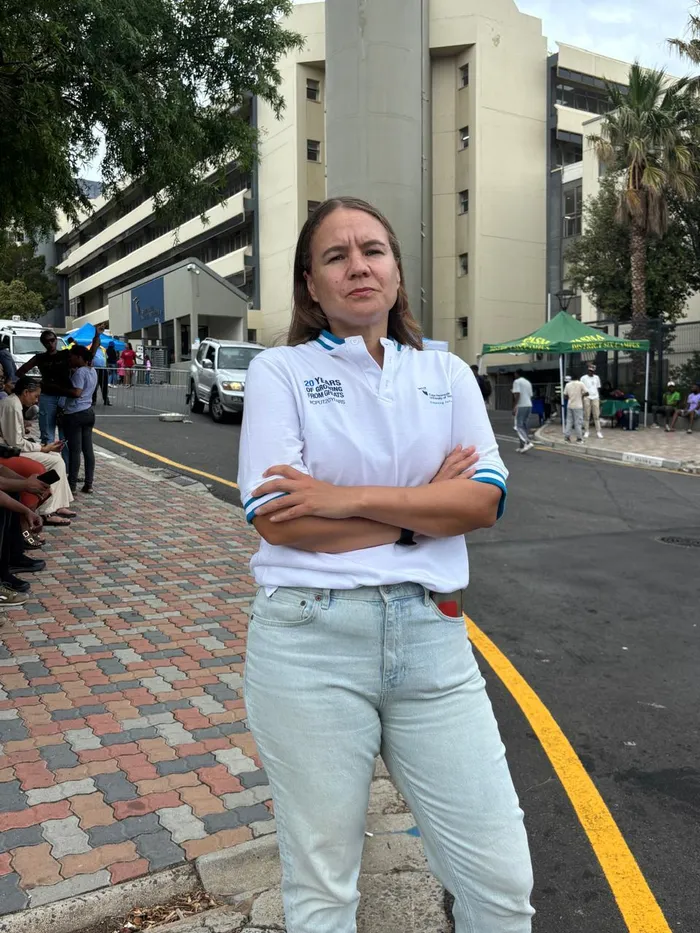
CPUT spokesman Lauren Kansley said student accommodation is currently filled to capacity.
Image: TARA ISAACS